
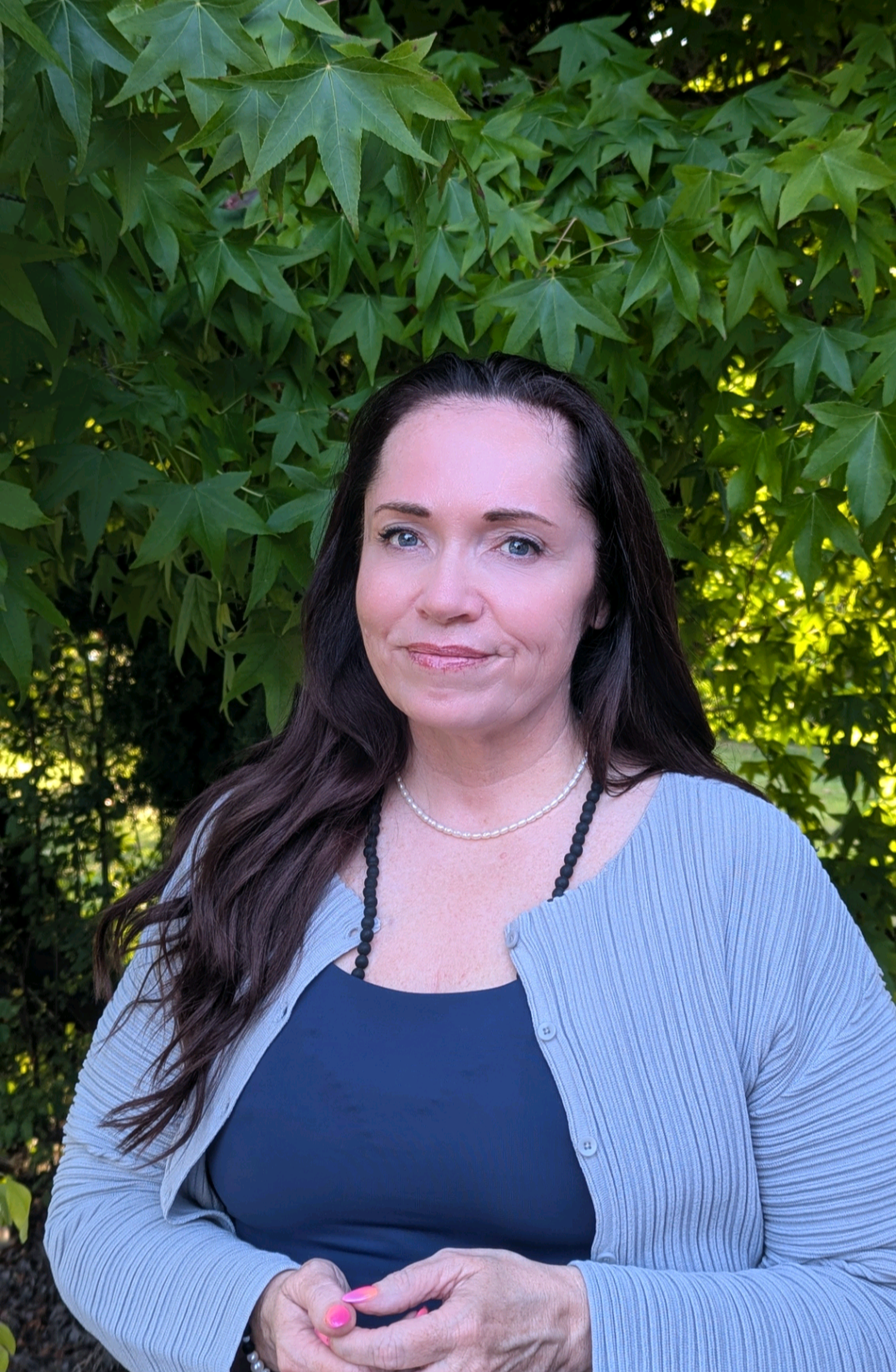
Anila Lacroix; Doctoral Student, Mindfulness Facilitator
Greetings! My name is Anilā and I am a doctoral student in Clinical Psychology at Adler University, where my training includes both psychotherapy and psychological assessment. My path to clinical psychology has been somewhat unconventional. Before beginning my doctoral training, I spent more than twenty years teaching traditional yoga and mindfulness practices, including working as a teacher trainer, and later completed an Honours degree in Philosophy at the University of British Columbia (UBC). Teaching somatic, philosophical and meditative practices was a great joy as it kept me alongside people as they met the harder and softer edges of their life experiences and self-concept. That era of my life was redirected after I incurred a brain injury; my path from that catalyst to where I am now was shaped by a recovery that unfolded slowly, invisibly and rarely in a straight line.
These different frameworks continue to shape how I understand people. My background in philosophy drew me toward questions of meaning, identity, responsibility, suffering, and what it means to live a life that feels authentically our own. My years of contemplative practice taught me to pay equal attention to what happens in the body. Clinical psychology brought those interests together with the science of human behaviour, emotion, relationships, and change. Now, my history continues to inform how I sit with people. I value curiosity, warmth, humour, and the capacity to stay present with experiences that may be painful, complicated, or difficult to put into words.
At Resilience, I am particularly interested in working with people navigating trauma, sexuality and sexual health, chronic pain or illness, brain injury, identity, and significant life transitions. My clinical interests are closely connected to my research. I have worked in UBC’s Sexual Health Research Laboratory, contributing to growing knowledge in women’s sexual health, and with UBC’s Motivated Cognition Lab. My passion as a therapist-in-training, and in my research, explores the intersection of embodiment, neuroscience, and existential psychology, with a particular interest in how people rediscover vitality, agency, and meaning following trauma, illness, or injury. I have been invited to present on women's health, sexuality, and the lived experience of chronic pain, reflecting my commitment to translating research into compassionate, embodied practice. As a therapy approach is informed by existential and somatic therapy, as well as trauma-focused cognitive behavioural therapy and mindfulness based therapy. I am certified in Gottman Couples Therapy Level 1 and DBT Skills.
I believe therapy can certainly be about reducing suffering, but it can also be about something larger: developing a deeper understanding of yourself and deciding how you want to embody yourself and your life. Healing does not always mean returning to who we were before. Sometimes it means courageously evolving into who we are becoming.